Latest Buzz...
                  

Translate

Showing posts with label Agriculture. Show all posts

Sunday, November 27, 2022

Grain crops - stubble management and nitrogen fertiliser

Farmers burn crop stubble in a rice field at a village in Fatehgarh Sahib district in the northern state of Punjab, India, November 4, 2022. REUTERS/Sunil Kataria

The Victorian department of agriculture describes current Australian farm practices for stubble management in wheat cropping. A number of options are discussed. 

For example, at "Crops and horticulture - Managing stubble", 

Crop stubble is the straw and crown of plants left on the soil surface after harvest. Stubble also includes straw and chaff discharged from the harvester (header). It is also known as ‘residue’ or ‘trash’.

Stubble management is one of many complex issues that farmers must contend with. Traditionally, grain growers have burnt stubble to manage weeds, diseases and reduce biomass to make sowing easier. This is no longer the preferred option. Numerous other methods can be used to manage stubble.

Retaining stubble, rather than burning or cultivating, protects the soil from erosion. It also conserves soil moisture and organic matter to sustain crop production. This is particularly beneficial in dry areas or in dry seasons.
A new piece of information discussed by a Canadian soil scientist - that spreading plant material with a high carbon:nitrogen ratio before it has been composted - can reduce soil nitrogen. 


Old tree leaves are a staple of fall but it seems wasteful to simply throw them into the garbage. However, applying these [and wheat stubble] to your garden the wrong way can be equally as damaging to your soil nutrients. This article looks at how to use old tree leaves in your garden properly.

If it is true that the same process occurs, reducing soil nitrogen with wheat stubble retained in fields after harvesting, the result will be an increased need for nitrogen fertiliser. 

Nitrogen fertilisers are increasingly expensive, and most are made from natural gas with significant carbon dioxide emissions.  

The soil scientist's advice suggests the need for nitrogen fertiliser may be lowered by harvest wheat stubble and compost it with fungi before spreading the composted stubble on fields. 

A small-scale experiment could evaluate the potential benefit of harvesting wheat stubble instead of leaving it to compost in contact with fields, and then spreading the composted wheat stubble to return nutrients and to increase soil carbon.

Work on this possibility has been completed in India: 

The smog choking New Delhi has been linked to the burning of crop stubble. Every year, most farmers in North India clear their paddy fields by burning an estimated 23 million tonnes of straw. This year, local officials have introduced a revolutionary method in a bid to tackle air pollution. Developed by the Indian Agricultural Research Institute, the bio-decomposer mixture of fungus, jaggery [an unrefined sugar product made in Asia], gram flour and water can help break down the stubble and turn it into compost that will help fertilise the land in just two to three weeks. 


Friday, December 24, 2021

Removing fossil fuels from ammonia-based fertiliser production

Farm productivity depends on nitrogen fertilisers. 

Large-scale ammonia plants have dominated the industry and these use fossil fuels as a chemical feed stock and energy. 

Other options are available - that use renewable feed stock and renewable energy to replace the fossil fuels used in traditional plants. 

Their is also an opportunity to make smaller scale production plants that will allow fertiliser to be manufactured near to both the renewable feed stock and to the farms that use the fertiliser. 

Urea is a widely used nitrogen fertiliser. Global production is estimated to have been 240 million tonnes in 2019. 

Most is made with natural gas as a feed stock and a source of energy. 

One tonne of urea has for much of the last ten to twenty years has cost about $500. It has risen sharply in price in 2021, costing around $1,500 a tonne. 

One tonne of urea contains 200 kilograms of carbon. 

Wheat straw and other crop waste containing cellulose contains this same amount of carbon in each 450 kilograms of cellulose. 

The first step in making urea is to produce synthesis gas - a mixture of hydrogen and carbon monoxide. 

This can be carried out with a device to gasify biomass. 

An example is the gasifier made by All Power Labs which it builds to make synthesis gas it uses to power an engine to drive an electricity generator. 


The PP30 Power Pallet is the culmination of our long work to create an expertly engineered, small-scale gasification solution that is realistic for today’s user. While personal scale gasification has long held tremendous promise, the realities of making it work usually prove too much for regular mortals. The high bar of operator expertise and extreme sensitivity to fuel particulars usually combine to make what seems simple in principle, exceedingly difficult in practice.

The Power Pallet has significantly widened this window for success by embedding the needed operator expertise in an onboard electronic brain.

To increase the proportion of hydrogen in the synthesis gas - for a following ammonia production step - an electrolyzer that produces some hydrogen by electrolysis of water using renewable electricity - could also supply pure oxygen to use in the gasifier. 

To convert the carbon monoxide to carbon dioxide and more hydrogen - both of which are used in later steps-

  • hydrogen to react with nitrogen to produce ammonia, and 
  • carbon dioxide to react with that ammonia to produce urea 

- a small-scale methane reforming unit is produced by Tokyo Gas that it uses as a fuel processing module in domestic fuel cell appliances.

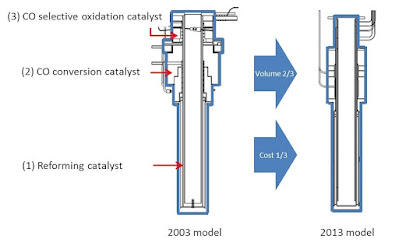
Ene Farm Fuel Processing System by Tokyo Gas


Because the three reactions take place at different temperatures, conventional practice is to use three varieties of reaction vessel. However, Tokyo Gas developed an integrated fuel processor that can handle the three chemical reactions in one vessel in 2000. 

We set a mass production target for 2003, and subsequently achieved further structural streamlining, developed and improved a high-performance catalyst, and reviewed the catalyst operating method. 

As a result, we succeeded in reducing total volume of the fuel processor by one third and production costs by two thirds in 2013.

The only other ingredient is nitrogen. Membrane filters are available that filter nitrogen from air for medium scale production processes.

A typical manufacturer of nitrogen membrane filters is Generon

Since the first large-scale ammonia production plants were built, many technical enhancements have been identified in the equipment to maintain the optimum temperature and pressure, the design of catalysts, and the development of chromium-molybdenum steel reaction tubes. Each of these enhancements can be replicated in a scaled-down plant. 

Small scale ammonia production plants are in operation that operate with renewable energy. 

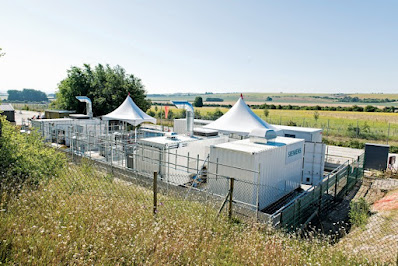
The Siemens green ammonia test plant uses wind power to convert hydrogen and nitrogen to ammonia.


Siemens in the UK is working with researchers at the University of Oxford, the UK’s Science and Technology Facilities Council, and Cardiff University to run a demonstration plant using the typical Haber-Bosch process, powering it with wind. Ian Wilkinson, program manager in corporate technology at Siemens, names two reasons the firm chose to use only mature technology available today to run its plant.

First, Siemens wants to show that it can produce ammonia renewably, in a way that it can quickly scale up. The company also views the plant as a test system for ongoing technology development, including Haber-Bosch catalyst development and ammonia combustion tests.

The plan has worked so far. The small plant, set up in shipping containers, takes electricity from a wind turbine, runs it through a hydrogen electrolysis unit, and then uses the resulting hydrogen to synthesize ammonia.

Monday, February 12, 2018

Wastewater gone without a trace

Wastewater treatment service business typically make claims  like -
"Our focus is on fit-for-purpose water re-use to ensure that your project delivers on your expectations."
A new business model could make a quite different claim -
"Our focus is on gone-without-a-trace wastewater conversion to renewable fuel."
Integrated biodiesel and biogas production from microalgae

Microalgae convert water and carbon dioxide into oxygen and chemical compounds of carbon, hydrogen and oxygen.

Some bacteria convert chemical compounds of carbon, hydrogen and oxygen into methane and carbon dioxide.


The above two processes results in the decomposition of water molecules  and carbon dioxide molecules and their reassembly into methane, oxygen and carbon dioxide molecules. For each 2 water molecules and 2 carbon dioxide molecules entering the process,  1 molecule each of methane, oxygen and carbon dioxide exit.

When 1,000 litres of wastewater are reassembled, the methane produced has an energy content of about 22 gigajoules.

While the value of 'fit-for-purpose" processed wastewater is very low, methane has a wholesale value around $10 per gigajoule and a retail price 2 - 6 times the wholesale value.


Another process uses renewable electricity that is generated when demand is low to produce gas from crop waste, municipal waste, sawdust, etc in a plasma gasifier...


Wednesday, December 20, 2017

Gas Vision 2050 by 2025

Gas Vision 2050 is an Energy Networks Australia report produced on December 18, 2017. Australia’s peak gas industry bodies prepared it to "demonstrate how gas may continue to provide Australians with reliable and affordable energy in a low carbon energy future."

The scope of the report is to "outline how Australia’s gas supply and infrastructure can be a national advantage as our energy mix continues to evolve."


The reports author's missed the option being explored across Europe: make us of Australia’s gas supply and infrastructure as an energy storage system.

This new purpose for Australia’s gas supply and infrastructure has the potential to make a substantial contribution to the economy. For instance, a proposal for a multi-billion dollar development of pumped hydro energy storage "Snowy Hydro 2.0" is years away from becoming a reality. The gas supply infrastructure can begin providing this function almost immediately.

The report describes three technologies under the heading "Decarbonisation Pathways" -
  • Biogas production – Biogas consists of methane and is already produced from municipal solid waste.
  • Hydrogen: Hydrogen can be produced from natural gas or through electrolysis. Hydrogen creates opportunities for clean energy for households, businesses or transport and can also generate zero emissions electricity using fuel cells or gas turbines.
  • Carbon capture and storage (CCS) refers to the process of producing decarbonised hydrogen from gas, coal, or biogas to remove carbon dioxide from the carbon cycle.
There is a fourth technology that has significant potential to accelerate decarbonisation of Australia's gas supply. So much so that the goal the report sets for 2050 may be achieved much sooner.

Biogas can be produced from a great many carbon-containing materials such as farm crop waste, municipal waste, sewage sludge, animal waste and timber waste. In each case about half the carbon combines with hydrogen from water in the mixture to form methane and the remaining carbon combines with the oxygen "left over" from the creation of methane to form carbon dioxide.

The result is a gas that is about 50/50 methane and carbon dioxide. The carbon dioxide needs to be removed before the methane is suitable for injection into gas supply pipelines.

Hydrogen can be produced using surplus renewable energy to split water by electrolysis. This is a method of energy storage. Hydrogen may be injected directly into gas supply lines, but the proportion can be no more than 10 percent by volume.
The fourth technology that isn't mentioned in the Gas Vision 2050 report tackles both of the above issues:
Waste materials containing carbon can be reacted with hydrogen. In this process ALL the carbon is converted into methane and NO carbon dioxide is created. So there is nothing to separate from the biogas before it can be injected into natural gas pipelines. The 10 percent limit on the proportion of hydrogen that can be safely mixed with natural gas is no longer an issue...
The biomethane produced via this pathway is achieving two purposes:
  • It is replacing natural gas with carbon-neutral biogas. 
  • It is storing renewable energy in the form of methane for use as required.
Production of Biogas/Methane by Biomass Hydrogasification


This needn't be a permanent part of a zero-emission energy system. While battery capacity investment is ramping up, excess wind and solar power can be stored and distributed as hydrogen and/or methane in the existing natural gas system.

Burning natural gas in heating appliances will eventually be discontinued, but for now, a large number of these appliances are being used. It will be some time before they are all replaced.

Small distributed gas-fueled electricity generation can be up to 60% efficient. These do the job that batteries and pumped hydro will eventually do - when enough of them have been built.

Farmers can replace coal seam gas industry by manufacturing methane from crop waste that is combined with hydrogen made to store  renewable energy.

When there are enough batteries and pumped hydro storage to eliminate the need for natural gas energy resources in Australia, this bio-methane can be used as feed stock in chemical industries to replace coal seam gas. It can also be exported as LNG, substituting for Australia's coal and coal seam gas energy exports.

Thursday, March 23, 2017

Energy cost savings in industry

Increases in energy costs are a signal for industry to audit its energy use and survey new plant that lowers energy use.

The abalone industry in South Australia in December 2016 received quotes for electricity supply at almost double its previous contract price:
Yumbah Aquaculture at Port Lincoln, on South Australia’s west coast, received an electricity contract quote for $1.35 million, $650,000 more than its current $700,000 contract.
Also in December 2016 the South Australian State Government announced a program to assist large businesses to audit energy use and invest in energy saving measures -
The 2016-17 Mid Year Budget Review provides $31 million over two years to help large South Australian businesses manage their electricity costs.

The Energy Productivity Program will be available to businesses that use more than 160MWh of electricity each year to incentivise investment in energy saving measures.

The funding will be available for businesses to undertake energy audits of their facilities to determine where efficiencies can be made.

The audits will also make recommendations about technology or infrastructure upgrades that could be carried out to reduce cost and grants will be available to implement the those recommendations. 

One area to examine in an energy audit at Yumbah Aquaculture is the circulation of  water from sea level up to its abalone growing tanks and back into the sea. The energy needed for pumps to raise water by, say, 20 metres is the same as the energy that is available when the same volume of water falls by 20 meters. Adding a micro hydro generator on the outflow from abalone growing ponds could generate almost as much energy used by the pumps to raise the water.


The value of the energy savings may make it worthwhile to invest in a micro hydro generator.


The food processing industry in Victoria has received quotes for natural gas with prices more than doubling in just a few years.
Echuca-based food processor Kagome expects to pay $3.6 million for gas this year, up from $2.4 million last year, despite plans to use less gas. Kagome employs more than 200 people. 
Natural gas is the dominant form of energy use for the food processing plant at KAGOME Australia
Kagome Australia's processing plant receives about 4,000 tonnes of tomatoes each day during the harvest period of 70 days. Natural gas is used to evaporate water from the tomatoes for the production of tomato paste.

Evaporating 1,000 tonnes of water from 4,000 tonnes of tomatoes each day can use an enormous amount of energy. This isn't necessary but it depends on how it is done.

One way to evaporate 1,000 tonnes of water that does use an enormous amount of energy is to simply put batches into large cauldrons with gas burners beneath them. Allow the tomatoes in the cauldrons to simmer until the desired volume of water has evaporated.

This way requires 2,257 gigajoules of thermal energy that converts 1,000 tonnes of water into steam. If this heat energy is supplied by natural gas costing $9 per gigajoule, the daily energy bill would be about $20,000 and the total bill over the tomato harvest period of 70 days woul be about $1.4 million.

There are several other ways to perform the same process using much less energy.

For instance, the energy needed to convert 1 kilogram of water into water vapour is 2,257 kilojoules. The same amount of energy can be recovered when that kilogram of water vapour is condensed back into water.
Mechanical Vapour Recompression (MVR)

The mechanical vapour compressor uses a very small amount of electrical energy to transfer a very large quantity of heat energy from the condensing steam back into the cauldron of tomatoes where it boils off an identical amount of water.
The cost saving of this method is all of the natural gas used in the inefficient method of converting 1,000 tonnes of water into water vapour. This method also produces distilled water while continually recycling the latent heat of evaporation in the water vapour as it condenses back into water.

The condensed water produced may have some value too as a pure, distilled by-product.

Equipment using this method is commercially available. One type is marketed as "forced circulation evaporators". These are for concentrating fruit paste (tomato paste, peach paste, apricot paste and etc.) and some other products with high viscosity. Another type is marketed as "falling film evaporators". These are for concentrating products with low viscosity, for example: fruit juice, milk etc.

The value of the energy savings may make it worthwhile for Kagome Australia to invest in a forced circulation evaporator and eliminate the need for natural gas.

Another option for Kagome Australia is new technology that makes renewable natural gas from wet biomass - such as tomato plants - collected during  crop harvesting...


Saturday, February 4, 2017

Searing heat years too soon for salad growers

The third heatwave in two months has hit salad growers in Queensland's south hard, with many farmers battling to harvest 30 per cent of their crop.
Farmer Clem Hodgman said he has been losing about 50,000 lettuces and 25,000 cauliflowers a week at his property near Toowoomba.
"The temperatures are so high, crops are burning off in the fields."
He said while prices were rising in supermarkets, farmers would not reap the benefit as energy and water costs rose accordingly.
"We don't want another summer like this for many, many years," he said.
But Rachel Mackenzie from farm lobby group Growcom said the heat could be the new norm.
She said an industry study into heat impacts on the salad industry did not predict such high temperatures for another 13 years.
"We were looking at 2030 in terms of when some of these thresholds would be reached," she said.
"This could be our new reality. We've had three years in a row where we've had significant heat, and we need to start saying what can we do to make sure we have the right [ways] to deal with this."


Birdsville sweats out record

The record for hottest February day in Birdsville in the state's far south-west has been broken, with Bureau of Meteorology (BOM) figures showing the mercury in the town hit 46.2 degrees Celsius at 4:10pm.
Previously, Birdsville's hottest February day was 45.8C in 2006.
The all-time record at Birdsville airport was 49C in January 2013.
More temperature records could be broken next week unless a high pressure system over the Tasman Sea arrives to cool things down.
The hot weather is the continuation of a low pressure surface trough over southern Queensland that contributed to higher than average temperatures in January.
Overnight minimums in January were the highest on record for a large area of southern Queensland, while maximum temperatures were in the highest 10 per cent of historical records for nearly all of the state's southern half.
The mercury peaked at 39.1C in Warwick on the Southern Downs yesterday, more than 10C above average.
BOM forecaster Vinord Anand said it was the hottest February day in the town since records began more than 50 years ago.
"The record before yesterday was 39 degrees, which was in February 1983," he said.
Applethorpe hit a scorching 36.8C, more than 11C above average.
"The last time it was nearly that hot was in February, also in 1983, when it was 36.1C," Mr Anand said.
The all-time maximum record for Applethorpe is 37.8C, while in Warwick it is 41.7C.
Mr Anand said it had cooled down slightly in the region today, with Applethorpe reaching 25C by 11:00am.
"It's cooler today in those areas compared to yesterday, but we do expect it to warm up again into the weekend and next week," he said.

Saturday, December 19, 2015

Global warming and climate change news

Sunday, May 17, 2015

Ammonium nitrate fertiliser ban underway since 2004

The same waiting for the LNP to solve any issue

Wreckage of a truck that exploded near Charleville in south-west Qld
Photo:  Highway construction work may have shielded emergency workers from the full force of the blast.

Saturday, May 2, 2015

Solar farming and electricity generation

Here's a challenge in financial optimisation while combining available technologies:
  1. Algae Tec has commercialised a method of growing algae for nutrients, edible oil and biofuels. It includes solar concentrators - but green algae (like all green plants) can only use the visible light photons with wavelengths of 400 nanometres (nm) up to 700 nanometres.
  2. Solar photovoltaic panels can convert concentrated solar energy into electricity - but silicon photovoltaic cells only use the photons with wavelengths up to 1100 nm. The infrared energy with photons having longer wavelengths only heat up the solar cells and reduce their performance.
  3. Sundrop Farms has commercialised solar concentrators that use solar energy of any wavelength but only convert it to heat that is then used to convert seawater and saline ground water to fresh water for high-value food crops in arid regions.

An interesting possibility is to concentrate sunlight then split it into 3 beams - one with wavelengths that algae and other green plants use, one with wavelengths that silicon cells can convert efficiently to electricity, and the third that heats a transfer liquid to be used for, say, converting seawater to fresh water...

Calculating the return on investment is the challenging part of the puzzle. In particular, can the investment in concentrating sunlight that Algae Tec and Sundrop Farms exploit be made even more profitable by splitting the sunlight and using each of 3 beams in the most profitable application available for each?

From "A guide to solar energy"

The energy required to move an electron from the semiconductor atom to a conducting state is a fixed amount. The energy of a photon of light is determined by its wavelength, with shorter wavelength photons having higher energy than those with longer wavelengths.
energy spectrum of sunlight and how it affects photovoltaic efficiency
Energy spectrum of sunlight and how it affects photovoltaic efficiency

A photon with wavelength 1,100 nanometres (nm), corresponding to short wave infra-red light has just enough energy to promote an electron in a silicon atom, the most commonly used semiconductor material.

All photons with a longer wavelength than this have insufficient energy to promote the electron and either pass straight through the PV cell or are absorbed as heat. This part of the solar spectrum cannot be used by the PV cell.

Photons with a shorter wavelength than 1,100nm have more energy than is required to promote the electron. The excess energy above that needed to move it into a conducting state is lost as heat.

These two factors combine to produce a theoretical upper limit to PV efficiency of around 31%.

From "Starlight is the solar power of the earth"

All biological energy comes from sunlight and this energy encompasses the range of the electromagnetic spectrum known as light. The solar spectrum is shown below.

The green pigment, chlorophyll, plays a central role in photosynthesis. The fact that it is green means that it absorbs blue and red light and reflects green when it is illuminated by white (all wavelengths) light.

Light with  wavelength longer than 700nm has insufficient energy to drive photosynthesis.

From "A beam-splitting photovoltaic thermal receiver for solar concentrators"

Ahmad Mojiri, Cameron Stanley and Gary Rosengarten
Royal Melbourne Institute of Technology Melbourne, Australia

A photovoltaic thermal receiver that separates incoming light energy by wavelength can produce electricity and thermal output of 150° simultaneously.

8 January 2015, SPIE Newsroom. DOI: 10.1117/2.1201501.005704

Sunlight is an abundant source of energy that can be converted into heat and electricity using photothermal and photovoltaic technologies, respectively. Usually these devices are separate from each other, and occupy significant space on a rooftop or in a solar park. Combining thermal and electrical output in a single package would achieve several advantages, such as more efficient use of available space and light collection.
Spectral splitting mechanisms
Figure 1. Spectral splitting mechanisms using (a) wave interference effect and (b) selective volumetric absorption. HRI and LRI correspond to high and low refractive index materials such as titanium dioxide and silicon dioxide, respectively. A specific number (n) of these layers are required to achieve suitable spectral splitting.


The solar spectrum consists of wavelengths in the range 400–2500nm, while silicon solar cells function most efficiently for the range 700–1200nm. Our beam-splitting mechanism separates light in the 700–1200nm range and directs it to the PV cells, sending the rest of the solar spectrum to a thermal absorber. The thermal and PV receivers are then being fed by two separate beams of light. The silicon cells remain cool at ambient temperatures.

We designed our system for a commercial parabolic trough: a partially curved, mirror-lined solar collector. We constructed a detailed ray tracing model (used to calculate the path of light waves through a system) for the proposed integration of our device in the solar concentrator, and optimized the dimensions of the receiver to maximize the energy yield of the system.

Monday, April 28, 2014

Renewable energy the winner from natural gas price hike

Natural gas prices on way up. It's time to find other sources of hydrogen for manufacturing fertiliser.

Natural gas is used as a source of hydrogen in the manufacture of ammonia - to make fertiliser for farming. Natural gas is also used as a source of energy in manufacturing fertiliser.

The price of natural gas is expected to double next year. This will lead to much higher costs to farming.

Other sources of hydrogen for manufacturing fertiliser need to be found to keep farming costs in check.


Hydrogen production from surplus renewable wind energy

"Hydrogen from surplus wind energy."
On August 28, 2013 E.ON inaugurated commercial operations at its Power-to-Gas (P2G) facility in Falkenhagen, Germany. The plant uses surplus wind power and Hydrogenics' electrolysis equipment to transform water into hydrogen. The facility which has a capacity of two megawatts produces 360 cubic meters of hydrogen per hour.
(Read more ...)


Hydrogenics Industrial Hydrogen Generators by Electrolysis

"Hydrogenics units have been adapted specifically to meet the requirements of higher capacity installation in excess of 500Nm3/h. Thanks to our standardized approach, we can expand our capacities to meet your hydrogen demand, offering you additional redundancy and supply reliability.
Indoor large capacity hydrogen generator

The hydrogen generator installation can be completed with additional options like a compressor system, online purity measurement and backup storage.

Whichever setup you need, Hydrogenics will offer you a stress–free equipment to provide your process with a reliable supply of on-site hydrogen. When we talk about hydrogen generators at Hydrogenics, we want to deliver a safe and reliable unit the best you can find on the market and the most competitive for that quality."


Related posts - 

Aussie farmers and coal miners take on gas

Innovations to solve political disputes

Orangutans, rainforests, human health, coal seam gas and algae 

Sunday, March 9, 2014

Improve water quality of inland waterways and generate income

Water quality and sources of pollution - Eutrophication and algal blooms

(Source: Australian Government - Department of the Environment)
Eutrophication occurs when the major plant nutrients - nitrogen and phosphorus - accumulate in water (or sediments). Given the right conditions, elevated concentrations of nutrients stimulate the growth of aquatic flora to nuisance levels. Examples include microscopic algae in the water column which may result in algal blooms...

Algal blooms are a natural occurrence, however, due to human activities (such as land clearing, destruction of riparian vegetation, water extraction, decreased flow and flow variability associated with weirs and dams, discharge of sewage and intensive agriculture), higher quantities of nitrogen and phosphorus have been reaching inland waters. Periods of low or no flow in many rivers have also increased due to high water extraction and river regulation. The combination of high nutrient levels and long periods of low or no flow provide ideal conditions for algal blooms to develop.

Blue-green algal blooms are of most concern in inland waters as certain species produce toxins that may cause skin irritations, gastrointestinal disorders, influenza-like symptoms and, in extreme cases, permanent organ damage and death (ANZECC/AWRC 1992). Many of the toxins produced by blue-green algae can affect people, livestock, birds and fish. ...

For human uses, blue-green algal blooms in drinking water resources is the most serious issue. Traditional water treatment methods are unable to remove the algal toxins from algae-contaminated water, while other alternative water treatment methods are expensive. Blue-green algal blooms may affect the recreational use of a waterway by decreasing its aesthetic amenity and posing a health risk to individuals who have direct contact with the algae.

"A $40 a tonne increase in the US in December has led Australian farmers paying up to $200 a tonne more for the fertiliser diammonium phosphate (DAP)."
Point sources of nitrogen and phosphorus include sewage treatment plants, intensive agriculture (such as cattle feedlots and piggeries) and industry. Although in most river systems, point sources only contribute to 5% to 35% of the total amount of nutrients entering the waterway (Environment Australia 1996; NPI 2000), their impact can be proportionally greater.

Point-source discharges are usually continuous and often contain high levels of nitrate and phosphate, forms of nitrogen and phosphorus that can be readily used by algae.

In dry weather, diffuse source nutrient pollution is generally low and point sources are the largest source of nutrients. The greater stability of the water column in dry weather is generally more favourable to the development of algal blooms (SKM 2001) and there is also less flow in river systems to dilute point-source discharges.

Although there is information on the quantity of nutrients discharged from sewage treatment plants (NPI 2000), there is no comprehensive information on other point sources. ... The contribution to nutrient loads from intensive livestock enterprises is potentially considerable as these facilities are widespread, often poorly regulated and generate wastes that are high in nutrients (e.g. manure).

Figures 13 and 14 show the quantities of phosphorus and nitrogen discharged to inland waters by sewage treatment plants each year. As New South Wales has the highest inland population, its sewage treatment plants also discharge the highest quantity of nutrients. The four river systems that receive the highest loads of nitrogen (greater than 100 tonnes per year) and phosphorus (greater than 30 tonnes per year) from sewage treatment plants are the Murrumbidgee, Hawkesbury-Nepean, Namoi and Hunter.

Tonnes of phosphorus discharged by inland sewage treatment plants each year.
Figure 13: Tonnes of phosphorus discharged by inland sewage treatment plants each year.
Source: Data for New South Wales, Victoria, Queensland and Tasmania were obtained from licensing databases supplied by state regulatory agencies. Data for Northern Territory, Western Australia, Australian Capital Territory and South Australia were obtained from the National Pollutant Inventory 2000.


Tonnes of nitrogen discharged by inland sewage treatment plants each year.
Figure 14: Tonnes of nitrogen discharged by inland sewage treatment plants each year.
Source: Data for New South Wales, Victoria, Queensland and Tasmania were obtained from licensing databases supplied by state regulatory agencies. Data for Northern Territory, Western Australia, Australian Capital Territory and South Australia were obtained from the National Pollutant Inventory 2000.


Struvite (magnesium ammonium phosphate) Recovery

"Ostara’s Pearl® technology created at the University of British Columbia recovers ammonia and phosphate from nutrient rich fluids."
Ostara’s proprietary wastewater treatment technology, called the Pearl® Nutrient Recovery Process, recovers phosphorus and other nutrients from sludge liquids preventing the buildup of struvite scale in plant infrastructure and converting the recovered nutrients into a premium commercial fertilizer (Crystal Green®)

The pellets are then harvested from the reactor and formulated to become Crystal Green®, a high-quality environmentally friendly, slow-release, commercial fertilizer that provides revenue for the system’s operator.

Ostara’s Pearl® technology is based on a proprietary fluidized bed reactor that recovers ammonia and phosphate from nutrient rich fluids. The technology, created at the University of British Columbia, uses a proprietary fluidized bed reactor design which removes approximately 85% of the influent phosphorus, but also results in the formation of a fertilizer in granular form consistent with that used in the fertilizer industry.
(Read more ...)


Incitec Pivot Phosphorus Fertilisers

Ammonia moleculeAmmonia Molecule
DAP (Diammonium Phosphate) is manufactured by reacting ammonia with phosphoric acid. Because it has a high nitrogen and phosphorus content, DAP allows savings to be made in storage, freight and application. It is a very economical nitrogen and phosphorus fertiliser and is widely used throughout the world. In Australia, DAP is used in cropping and on grass pastures, both on its own and in blends, e.g. for sugarcane and horticulture.

Sunday, February 23, 2014

Innovations to solve political disputes

Politics is often about compromise and inevitable conflict between competing interests.
Sometimes an innovation or two comes along that gets rid of the issues that created the conflict.

There are a couple of innovations that benefit multiple interest groups who are more often than not in conflict with each other: bluegas™ and MicGAS™
GreatPoint Energy produces clean, low cost natural gas from coal, petroleum coke, and biomass utilizing its bluegas™ catalytic hydromethanation process.


GreatPoint Energy's coal gasification technology appeals to China because it allows them to keep using cheap domestic coal, but in a much cleaner manner.

In 2012, GreatPoint announced a $1.25 billion deal to build the first of 34 coal gasification plants in a remote, coal-rich part of China.

The total project will cost an estimated $20 - 25 billion and will supply one trillion cubic feet of natural gas a year.

This represents a massive leap in the scale of domestic production for China, which last year produced only 107 billion cubic feet of natural gas.

The deal includes an equity investment of $420 million, the largest ever by a Chinese corporation into a venture-capital-funded U.S. company.
Hydromethanation

For over 20 years, scientists from Humaxx, and parent research and development company, Arctech, have perfected and pioneered the biotechnology for the conversion of coal into natural gas and the manufacturing of humic substances into environmentally safe solutions.

MicGAS is a hydrogen-rich clean methane gas (CH4) produced from coal by specially engineered microbes.

Gas composition ranges from 60-80% methane and remaining carbon dioxide (CO2).

Higher rank coals produce more methane enriched gas than lower rank coals. MicGAS can be utilized for heating, power generation, upgraded by removing carbon dioxide to natural gas generally 90%+ methane.

Commercial and environmental significance of MicGAS.

Through its development of the Arctech Process, we have continued to substantially improved efficiencies and production techniques associated with MicGAS production from coal.

We know of no other coal gasification technology, in either ex situ or in situ circumstances, that presently claims to successfully gasify coal at near ambient temperatures and without the need for significant costs associated with thermification.

This uniqueness presents major opportunities for both reduced carbon footprints and cost efficiencies for “coal gasification” processes.

Bioconversion of coal is accomplished by adapting micro-organisms derived from the gut of termites to coal in the presence of other appropriate nutrients.
Methane production by coal biotechnology

Some existing issues and interest group conflicts

Australian oil and natural gas companies have invested $70 billion in LNG export terminals in Queensland.
  • Australian farmers are concerned that the coal seam gas industry will jeopardise their businesses by polluting water on which they rely. 
  • Australian industry is concerned that the export of huge quantities of natural gas with no proportion reserved for domestic markets will damage their commercial viability. 
Preventing the growth of the coal seam gas industry - desired by Australian farmers - seems to undermine the ability of the oil and natural gas companies to gain a return from the billions of dollars invested in LNG export facilities.

This seems an insurmountable obstacle to any solution to the concerns expressed by Australian farmers.

Australian coal mining companies have gained approval to expand export infrastructure including the coal terminal at Abbot Point in Queensland.
  • Australian environment protection groups are concerned at the plans to dump dredge spoil during building the coal terminal in the Great Barrier Reef Marine Park. 
  • Australian environment protection groups are also concerned at the prospect of substantially increasing coal exports that seem destined to increase global carbon dioxide emissions when climate science advises that this will aggravate man-made climate change. 
The Queensland State Government is depending on growing coal royalties to support its budget.

An opportunity to use LNG export terminals and earn coal royalties
- without coal seam gas and
- without dumping waste in the Great Barrier Reef Marine Park

An innovation developed by a U.S. company converts coal into synthetic natural gas, hydrogen and carbon dioxide.  This innovation could be used to provide natural gas for export from coal mined in Queensland and NSW.
  • The LNG export terminals can export this natural gas. 
  • The Queensland and NSW State Governments  earn coal royalties from the coal converted to natural gas for export. No coal seam gas investment is needed. 
  • No investment in the expansion of coal export infrastructure is needed and so there is no dredge spoil to dump in the Great Barrier Reef Marine Park.

There are some additional benefits...
  •  The Queensland and NSW coal industry faces difficult market conditions due to falling world prices for coal. Mine closures and job losses slow the Australian economy and cut the return on investments made in mining plant and equipment that is now idle. 
  • Australian farming is faced with rapidly rising fertiliser prices. Natural gas to be exported through the $70 billion LNG export terminals is expected to cause the price of natural gas to double or triple. Fertiliser manufacturers now use natural gas as a source of hydrogen. This is a major component in ammonia fertilisers used widely in agriculture. The innovation for converting coal into synthetic natural gas can also produce large quantities of hydrogen and this should  help keep the price of fertiliser down. 
  • Environmental groups and health groups have a number of concerns over the palm oil industry. These include:
  • the destruction of rainforest - with adverse impacts on carbon dioxide emissions and on endangered species' habitats, and 
  • The growing use of palm oil in foodstuffs may be contributing to adverse health outcomes throughout Australia's population. 
  • The innovations for converting coal into synthetic natural gas - either bluegas or MicGAS - also produces carbon dioxide. 
  • This can be used in algae farming to produce edible oils to substitute for palm oil. 
  • This provides an opportunity for growth of Australian agriculture - in addition to overcoming the concerns over palm oil.
An Australian company has developed an innovative method for algae farming that may be able to be exploited to achieve these positive outcomes.

The cost of drilling large numbers of coal seam gas wells is substantial. Either of the newer methods for obtaining substitute natural gas from coal may well be a better investment.


Production wells will be installed progressively throughout the project life starting in 2014 and ending in 2035. It is expected that up to 18 drilling rigs will be used to install the 7,500 wells.

...
Following the completion of drilling, surface equipment such as the wellhead, dewatering pump, wellhead gas/water separator, control valve, metering and telemetry/communications equipment will be installed. Gas-driven electric generators will be required at wellheads to power the dewatering pumps and ancillary equipment until the gas free-flows, after which production wells will be powered by solar panels where possible.

Low-pressure gathering lines will be used to deliver gas directly from production wells to production facilities. Medium-pressure gathering lines deliver gas from field compression facilities to both central gas processing and integrated processing facilities.

Related posts - 

Orangutans, rainforests, human health, coal seam gas and algae 

Aussie farmers and coal miners take on gas

Farming, mining and natural gas prices

The Great Barrier Reef vs the Queensland State Budget

Coal and Natural Gas power plants